| |
|
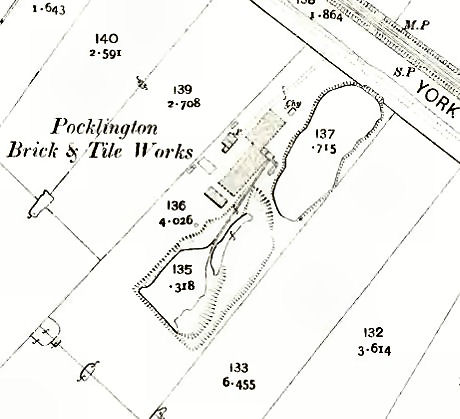
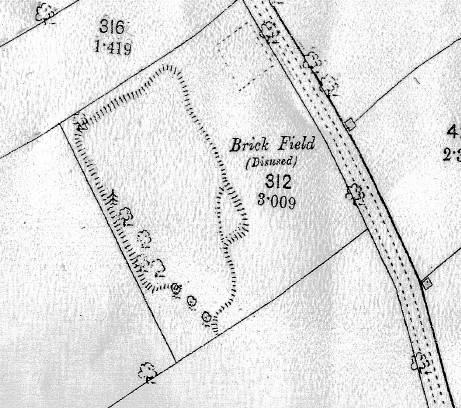
1911 OS Map of Burnby Lane, Pocklington |
| |
|
| Trade directory entries for Pocklington Brick makers: |
|
1858 White's Directory - Charles Ogle, Brickmaker, Union Street
1858 White's Directory - Thomas Grant, Builder & Brickmaker
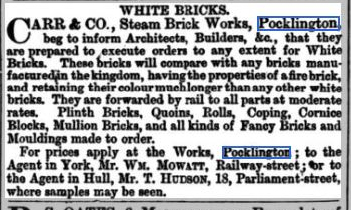
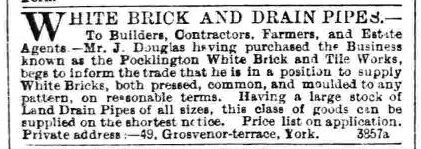
1868 Hull Daily News - 16 May 1868 - Carr & Co. Steam Brick Works Pocklington Advert for White Bricks
1879 Post Office Directory – Thomas Grant, Builder & Brickmaker
1879 Post Office Directory – John Nottingham, Brickmaker
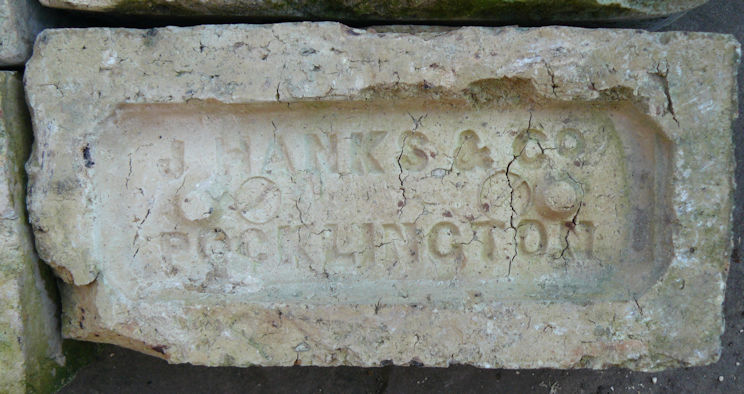
1889 Kelly’s Directory Hanks & Co. Brickmakers, Burnby Lane
1892 Bulmers Directory – Clare Walker, Brickmaker, Burnby Lane
1897 Kelly’s Directory – Clement Walker, Brickmaker, Burnby Lane
1905 Kelly’s Directory – Alban Dunwell, Brickmaker, Burnby Lane
1909 Kelly’s Directory – James Dunwell (Trustees of), Brickmakers, Burnby Lane
1913 Kelly’s Directory – James Dunwell (Trustees of), Brickmakers, Burnby Lane
1921, 1929, 1933 & 1937 Kelly’s Directories – No Brickmakers mentioned |
| |
The first mention of brickmaking in Pocklington trade directories that I have found is in 1858 when Charles Ogle of Union Street said he was a brickmaker and in the same directory Thomas Grant (Pocklington Builder) was also a brickmaker. However Thomas Grant was not a brickmaker in Pocklington, he made bricks in the Bishop Wilton brickyard, as he was proprietor.
|
|
Hull Daily News - 16 May 1868 |
|
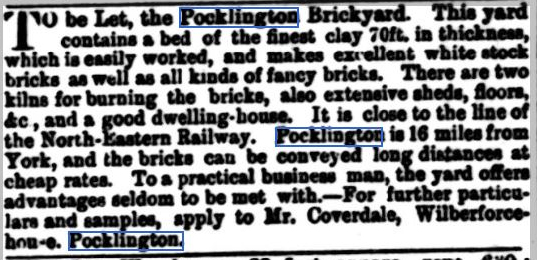
Hull Daily News - 13 Sep 1873 |
|
The York Herald, January 5th, 1884 |
|
The York Herald, July 29th, 1889 |
| |
| |
Bishop Wilton Brickyard
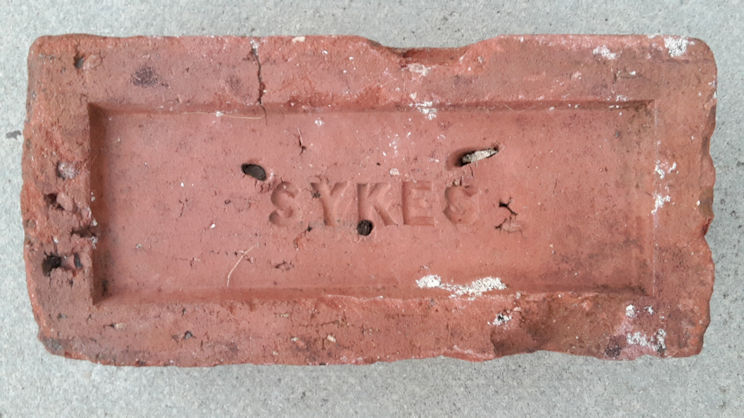
Thomas Grant was proprietor of the Bishop Wilton Brick Yard, which was owned by the Sykes family of Sledmere. According to research published in the Bishop Wilton History Group bulletin, it was in operation from 1854 to 1886. The clay pit was on the lane out of Bishop Wilton towards Pocklington. Coal would be brought from Pocklington Railway station and sand and gravel was available in the immediate vicinity around Pocklington. Wood for the fires would be locally available from the wold escarpment. All the ingredients were locally available. See the Sykes brick below - possibly made in Bishop Wilton.
|
|
1892 OS map of the disused Bishop Wilton brickyard |
|
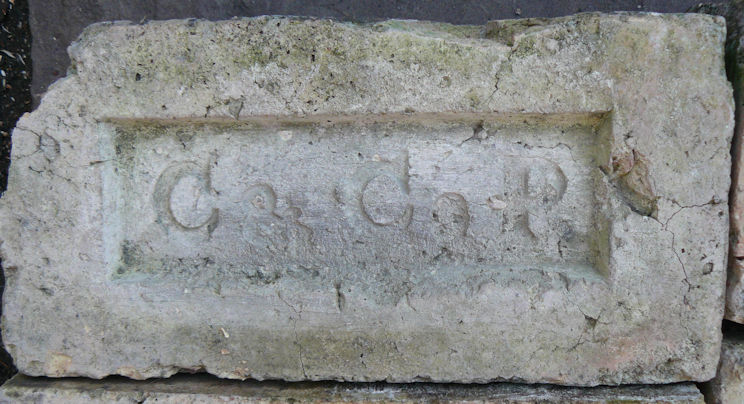
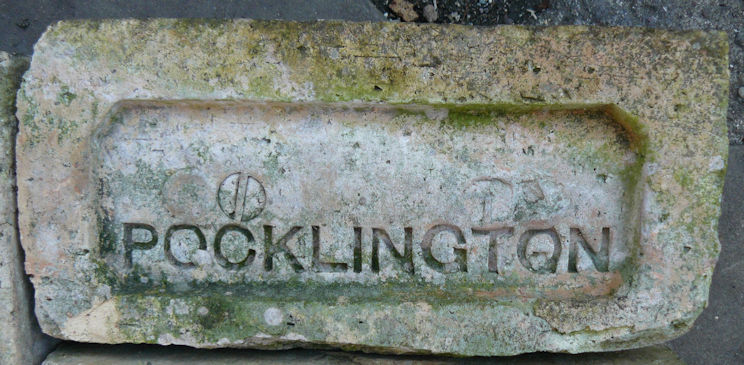
Carr & Co. Pocklington - a brick from the Burnby Lane works c. 1868 |
|
Hanks were making bricks & tiles in Pocklington in the 1880's |
|
The frogs are identical to the other types
with the distinctive screw head impression |
|
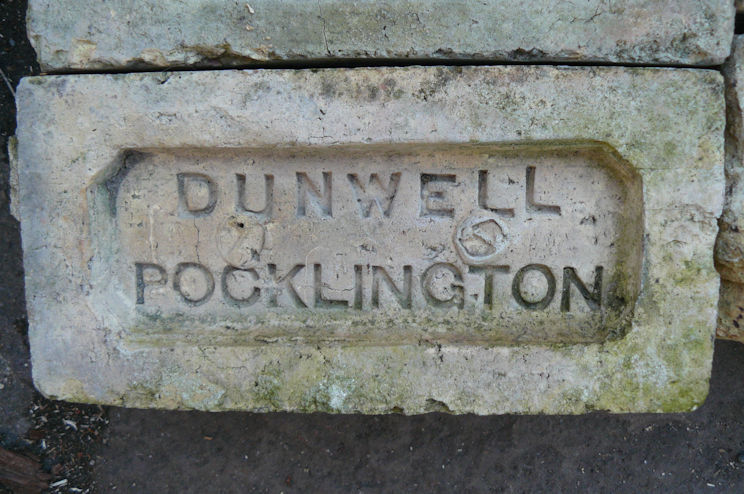
Dunwells were making bricks in Burnby Lane from 1900-1915 |
| |
| Brick photographs are by kind courtesy of Andrew Boyce of the Bishop Wilton History Group. If you wish to add to the story of the Brick works, or correct any of the above information, then please contact me. |
|
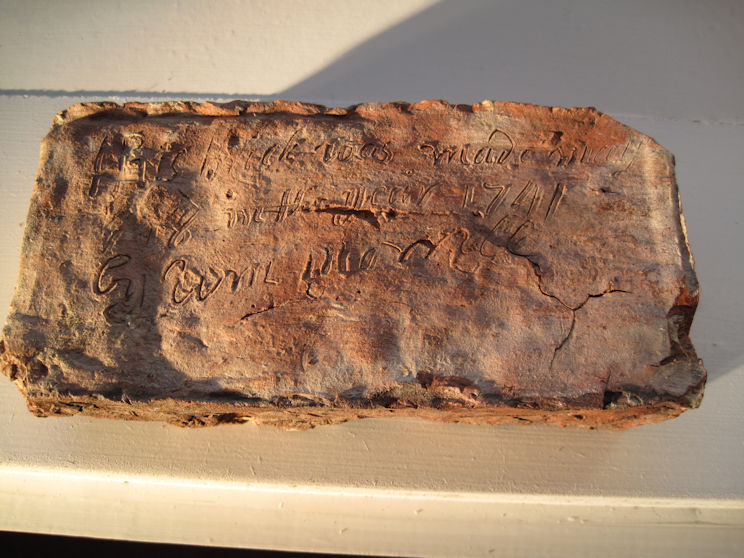
An old brick found in Bielby by Richard Coe says on it:
"This brick was made 18 May 1741 by Wm Morrill" |
|
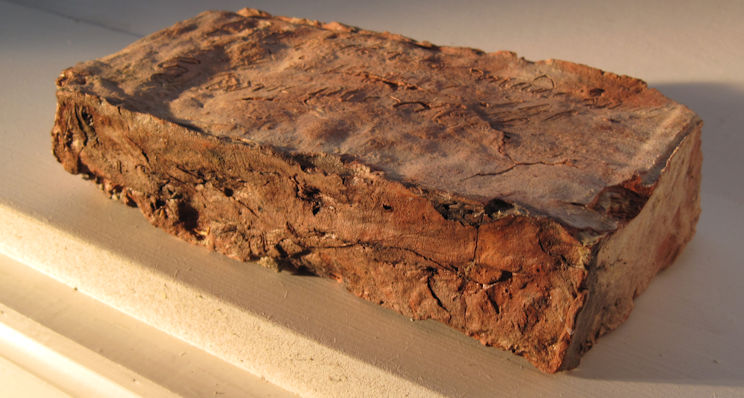
The brick is a handmade of 2 inch depth |
|
A Sykes brick found at Sledmere by Carla Van Beveran |
|
A 'dreain' (Yorkshire word for drain?) brick found in Clayfield Road, Pocklington by Carla Van Beveran |
|
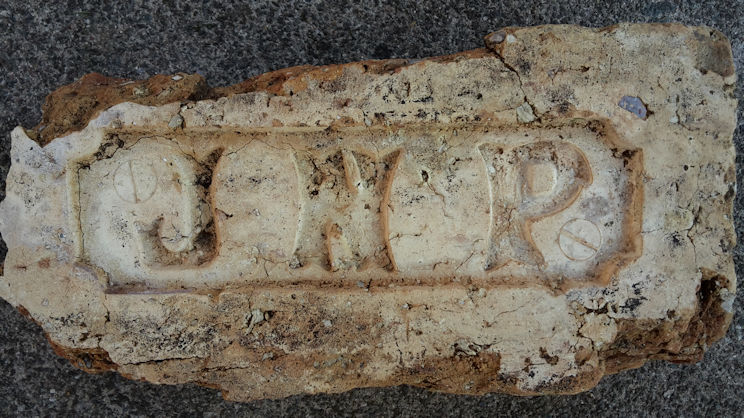
A J N P brick found at Meltonby by Carla Van Beveran
possibly 'John Nottingham Pocklington' who was a brickmaker in the Burnby Lane brickworks in 1879 |
|
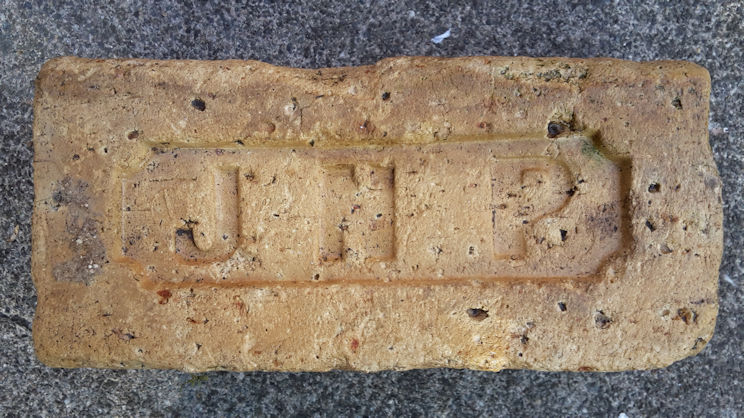
A J N P brick found at Barmby Road bomb dump by Carla Van Beveran
possibly 'John Nottingham Pocklington' who was a brickmaker in the Burnby Lane brickworks in 1879 |
|
A J N P brick found at Yapham by Carla Van Beveran
possibly 'John Nottingham Pocklington' who was a brickmaker in the Burnby Lane brickworks in 1879 |
|
A P S S brick found at Seaton Ross by Carla Van Beveran
possibly someone with the initials 'P S' of Seaton Ross |
 |
| |
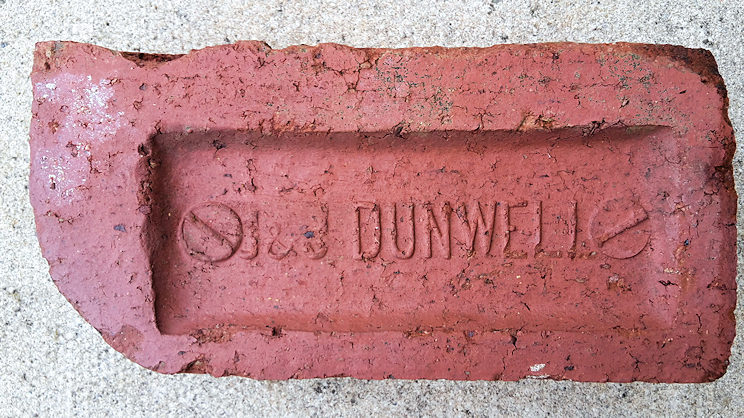
J & J Dunwell brick found at Sledmere by Carla Van Beveran
J & J Dunwell. Bullnose brick, with the same name in the frog on both sides and most likely made at the Burnby Lane Brickworks in Pocklington. John Nottingham has researched the Dunwell's and found the 1901 census had James Dunwell's brickmaking son Alban living on Burnby Lane (near the Workhouse, so was presumably then running the Pocklington Brick & Tile Yard). By 1911, he was running the brickyard in Darlington and the census return shows Alban and his family were living nearby. However, note that both their sons are recorded as having been born in Pocklington, their births being registered at Pocklington in 1902 and 1904 respectively, so it looks like they were living on Burnby Lane probably throughout the period of at least 1901-1904 (having married in Sheffield in 1900). John's opinion is that 'J & J Dunwell' were most likely to be James and his younger son Joseph (James's grandson also James was too young to be a brickmaker)
James Dunwell was a brickmaker from Leeds, then moved to the Mill House in Egton Bridge with his son Alban by the 1891 census. Both were brickmakers so presumably commuted by train to and from the big brickyard up the line at Grosmont (just North of the station, opposite the ironworkings). They may never have been based at Pocklington but, like the several others, were the owners and/or managers (Alban was living a couple of doors from the Workhouse on Burnby Lane in 1901). In 1901, James and younger son Joseph were living in Darlington, both brickmakers, so were most likely to be the 'J & J Dunwell'. (Note the 'screwheads' on the frogs, characteristic of other Pocklington products.)
James died in Darlington in Q3 of 1907 - cf. 'James Dunwell (Trustees of), Brickmakers' in the 1905 and 1909 Kelly's Directories for Pock (see above). It is uncertain to what then happened to Joseph but Alban was Manager at the brickworks in Darlington by 1911.
|



 744px.jpg)
 744px.jpg)
 744px.jpg)