Latest Updates
 The Dickens link to Pocklington and Malton The Dickens link to Pocklington and Malton
RICHARD CHICKEN was an interesting character and was born in York on the 6th August 1799. He spent some of his early life in Pocklington with his grandparents, which local resident stories suggests was at Brass Castle Hill. His mother was Elizabeth Huddleston of Pocklington, the daughter of Richard Huddleston, who was the steward to the Denisons of Kilnwick Percy. She married Nicholas Chicken in Pocklington church in 1798, and produced Richard their only son, the following year. Charles Dickens visited his younger brother Alfred in Malton on many occasions and must have met Richard Chicken through contact via his younger brother. Richard Chicken made such an impression on the author that he immortalised him as Wilkins Micawber in ‘David Copperfield’, his favourite, and often said to be Dickens own autobiographical book. It was first published in monthly parts in 1849 and completed in the autumn of 1850. Dickens' association with Malton was known through his friendship with Charles Smithson a solicitor who practised in Chancery Lane. Although Charles Dickens had not penned "A Christmas Carol" in Malton, the Smithson family were told by Dickens that the office in Chancery Lane was the model for Scrooge’s Office and that the ‘Bells’ described in the novel were those of St Leonard’s Church on Church Hill.
Now Available! - Ladies Largely Predominating
 The Women's History Group book called 'Ladies Largely Predominating' was launched in August 2011. Pocklington History, like the nation's history is nearly all about men and their roles. The Pocklington Women's History Group came together to focus on the history of women in Pocklington and the surrounding area.The authors were; Heather Anderson, Jo Green, Sue Skelton, Sue Bond, Jane Henley and Joyce Fowler. The Women's History Group book called 'Ladies Largely Predominating' was launched in August 2011. Pocklington History, like the nation's history is nearly all about men and their roles. The Pocklington Women's History Group came together to focus on the history of women in Pocklington and the surrounding area.The authors were; Heather Anderson, Jo Green, Sue Skelton, Sue Bond, Jane Henley and Joyce Fowler.
From Mary Fawkes, a 14 year old agricultural labourer and occasional resident of Pocklington workhouse to Mary Dewsberry, a wealthy and charitable lady of the town. The aim of the booklet is to tell a little about what women were doing in nineteenth century Pocklington.
The book is available from ebay for the amazing price of £2.
Now Available! - Bill's Book
 Peter Halkon has edited this new second edition of the book and writes: "For some years now I have been asked if it was possible to produce a new edition of this volume. Hutton Press, an excellent publisher of Local History ceased producing books some years ago and Mr. C. Brook very kindly released rights to publication. Since 1990, time has passed and people who contributed to the first edition of this book have died including Doris Adamson, Bill’s sister and Bridget his daughter, Sefton Cottom, Alice Kitching and my parents. In 2020 the need to republish was spurred on by my wife and I moving to Nunburnholme, Bill’s birthplace, to live in the house my parents moved to fifty years ago this year. A further reason for this edition was the revival of interest in Bill’s music, largely due to Jim Eldon, veteran of the Hull folk music scene who, at the time of writing, is continuing to play the Harrison family repertoire at various venues. " Peter Halkon has edited this new second edition of the book and writes: "For some years now I have been asked if it was possible to produce a new edition of this volume. Hutton Press, an excellent publisher of Local History ceased producing books some years ago and Mr. C. Brook very kindly released rights to publication. Since 1990, time has passed and people who contributed to the first edition of this book have died including Doris Adamson, Bill’s sister and Bridget his daughter, Sefton Cottom, Alice Kitching and my parents. In 2020 the need to republish was spurred on by my wife and I moving to Nunburnholme, Bill’s birthplace, to live in the house my parents moved to fifty years ago this year. A further reason for this edition was the revival of interest in Bill’s music, largely due to Jim Eldon, veteran of the Hull folk music scene who, at the time of writing, is continuing to play the Harrison family repertoire at various venues. "
This autobiography describes Billy Harrison’s life in a bygone age. Born in the picturesque Yorkshire Wolds village of Nunburnholme in 1898, he was a gardener at Warter Priory, home of the Hull shipping magnate, Charles Wilson, and his formidable wife, Lady Nunburnholme. Bill helped in his father’s steam threshing business, and he vividly depicts the hard life of a worker on the land before the advent of the tractor. Bill was called up to fight in the First World War, going over the top at Cambrai, an experience which is retold grippingly. A keen and able musician, Bill subsequently played fiddle in country dance bands and other village festivities. He moved to Millington in 1942, where he died aged 88 in 1986.
Peter Halkon has updated the book with new photographs and text and this brand new second edition is published by Pocklington District Heritage Trust. It will be available at the forthcoming Pocklington Heritage Festival for £10 and on ebay.
Pocklington in 1925
Jim Ainscough has kindly allowed the script of his talk he gave to the Pocklington & District Locsl History Group on the 18th September 2025, to be publically available together with the illustrations from his Powerpoint and is available to view here.
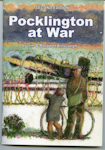
Pocklington at War - Second edition
"Pocklington at War" was first published sixty-five years after the end of the Second World War based on research in local primary sources and on the recollections of people who lived in Pocklington during the war. The significant changes in the second edition include additional photographs and information which has come to light in recent years particularly about the armed forces based in the town during the preparations for D-Day. Jim Ainscough's book is available at the Arts Centre for the 'Pock into Pock' day on 27th September 2025 between 10am & 1pm. It is also available online using this link.
Pocklington Parish records from the IGI updated
 The IGI have changed their method of accessing parish records via batch number. I have changed the links to make this work but you must login first and it is free to register to access their records. So now you can search for Pocklington names using the IGI Batch Code feature of familysearch.org. The IGI have changed their method of accessing parish records via batch number. I have changed the links to make this work but you must login first and it is free to register to access their records. So now you can search for Pocklington names using the IGI Batch Code feature of familysearch.org.
Burnby Hall lease is signed!
From the Pocklington Post Facebook for 7th August 2025:
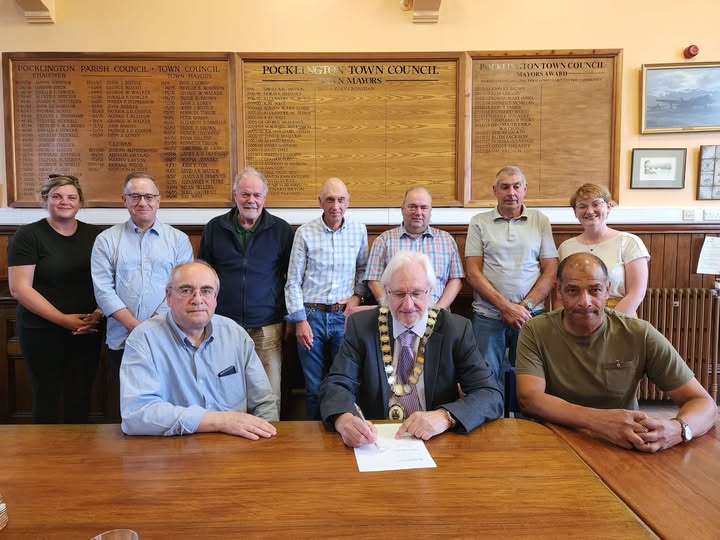
Pocklington Town Council has announced the official lease signing for Burnby Hall. This milestone ‘marks a major investment in the town’s social infrastructure and reflects the council’s commitment to support local aspirations’. The new facility includes a large main hall available for public hire, along with office spaces and meeting rooms for community and civic use. It will also support a range of local initiatives – most notably, the development of a long-awaited town museum, a project close to the hearts of many local residents. Cllr Roly Cronshaw, Mayor of Pocklington, said: “The signing of this lease is a proud moment for Pocklington. Not only are we creating a flexible and welcoming space for local groups and events, but we are also taking real steps toward making the town’s museum a reality. "This facility will serve as a cultural and civic hub for generations to come”. A spokesperson added: “An independent trust has already been set up to run the building and its facilities. We are indebted to the volunteers involved and to Burnby Hall Museum and Gardens Trust. "Whilst this is a long-awaited milestone, the hard work is still to come. There are major repairs and essential health and safety measures to put in place before the main building rooms can be used — and this requires serious funding. "Funding initiatives are already in place, but as this building will now become an important community asset, any financial support will be greatly welcomed. "In particular, we are inviting local businesses to the opportunity to become involved. This might include sponsorship for individual rooms within the facility. Sponsorship offers a chance to make a lasting contribution to Pocklington’s future, and sponsors will be acknowledged within the space they support. "Any business interested in being part of this exciting project is warmly encouraged to get in touch with Pocklington Town Council.”
Go to www.burnbyhall.org.uk for the community hall’s opening times and booking details.
Latest Crowdfunding News - The Pocela Panel comes home!
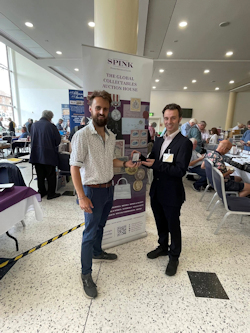  The rare early medieval gold panel found near Pocklington has finally returned home after it was delivered to Pocklington District Heritage Trust trustee, Alex Harvey, this week. The rare early medieval gold panel found near Pocklington has finally returned home after it was delivered to Pocklington District Heritage Trust trustee, Alex Harvey, this week.
The handover was the culmination of six months of concerted efforts by the trust to secure the gold and garnet piece after being ruled in January as too important to be allowed to leave the country.
Pictured left: PDHT trustee Alex Harvey receives the Pocela Panel from Spinks of London who conducted the auction sale.
Following its discovery by a local metal detectorist in 2013, the panel was officially declared as treasure, but its offer to museums at that time was not taken up. When the piece came to auction last September, the winning bid was by a foreign collector, with the government then imposing a temporary export bar to give British institutions a two-month window to raise the asking price to keep it in the country.
That gave the local heritage trust an opportunity to make the 1,400-year-old panel a prize exhibit in its planned museum in Burnby Hall. A crowd funding appeal was quickly successful, raising the required £4,000 in just two weeks, with generous donors from a wide area keen to save it for the nation and allow it to be publicly displayed for the first time.
There were still major negotiations needed between the heritage trust, the Department of Culture, Media & Sport, other museums and Arts Council England, before the Pocklington bid was recognised then accepted. But everything finally came together on Friday when London auctioneers, Spink, brought the piece to York and presented it to the trust’s representatives.
Imposing the export bar back in January, Arts Minister, Sir Chris Bryant, commented: “This beautiful panel potentially holds information into how the Medieval kingdoms of this country interacted and co-existed. I hope a UK buyer can be found so it can be studied further and its stories can be shared with the public.”
The heritage trust has named the piece The Pocela Panel after the semi-legendary ‘Pocela’, who may have given Pocklington its name around (c. 600-670) , when the intricate piece was created using Continental gold plus garnets from South Asia.
And the trust has already taken up the government’s challenge to undertake more research; with early medieval archaeologist and author, Alex Harvey, who also works at the Yorkshire Museum, pulling together further findings about the era. His research will focus on other East Yorkshire discoveries, overseas links with Merovingian France, and the national and international context of the Pocela Panel’s workmanship; in order to reveal more information about it and the wider context of early medieval Pocklington.
The GoFundMe fundraiser is still open for donations with any surplus going towards the setup of a new museum in Pocklington to house the local artefacts.
 Pocklington Church Clock Pocklington Church Clock
Pocklington's town clock situated on the tower of All Saints Church was manufactured in 1841 by a mechanic and clock maker called Charles Brown from Selby. A restoration committee was formed by the town council in 2002 to restore the church clock and raised £15,000 to repaint the dials, electrify the mechanism and bring back the quarter hour chime. The committee's fundraising efforts were helped by donations from the town's residents and two national funds, the WREN organisation, the administrator for the landfill tax credit scheme, and the Local Heritage Initiative.
 The work was completed in 2003. The work was completed in 2003.
Who was “Pocela” ?
The library in Pocklington is named the “Pocela Centre”, but why is it so named? The Survey of English Place-Names, a British Academy Research Project, is one of the longest-running projects of its kind. It states that the place name of Pocklington derives from the 'farm of Pocela's people', from the old English name of Pocela plus ”ing“ meaning 'his followers' plus “ton” the old English word for settlement.
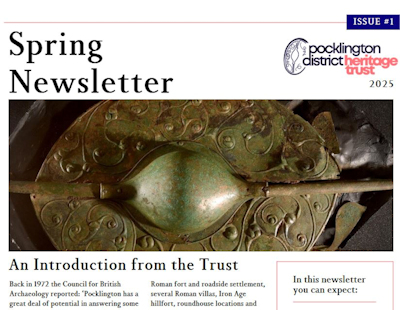
Spring 2025 Newsletter of the Pocklington District Heritage Trust
Here is the first Newsletter for the Pocklington District Heritage Trust. PDHT hope to produce a quarterly edition which will contain the latest news and will also be available from their website and pocklingtonhistory.com
Crowdfunding News
Pocklington District Heritage Trust (PDHT), a registered UK charity, has started a crowd funding page to prevent a rare Pocklington Anglo Saxon artefact from being exported from this country and lost forever.It was recently sold at auction and about to be exported to the USA until the government stepped in to halt the export until 23rd March in the hope a uk museum would step in and save it for the nation. PDHT are in the process of creating a Museum to showcase our unique local heritage at Burnby Hall. If you would like to contribute a small sum to help our quest, we would be most grateful. Lets keep our UK heritage in the UK.
https://www.gofundme.com/f/save-a-pocklington-anglo-saxon-artefact-from-export
**LATEST UPDATE ** = Target achieved !! - Thanks to everyone's support and generosity. PDHT are over the finishing line having raised the target £4,000. Having reached the target amount the Arts Council England have been informed. They are managing matters on behalf of the Dept of Culture, Media and Sport. We now have a long wait until late March for the consultation period to end. Hopefully, PDHT will be successful with their bid, but other museums or Art Galleries may also bid, but “bringing home” the artefact will add some gravitas to the bid.
The appeal is running for a short while futher as funds are needed to purchase a suitable cabinet in which to house it permanently. It should be on display in the place it was found. It will be conserved and cared for by East Riding Museum service until the ultimate destination is in place.
 The 2024 Pocklington Heritage Festival The 2024 Pocklington Heritage Festival
This year's Heritage Festival enjoyed three very different days of historical information, entertainment and activity. The festival unveiled the UK Government Shared Prosperity Fund supported 'Transportable Museum' displays that were on show throughout; and the first day's Anglo-Saxons & Vikings conference was a sell out. Delegates heard eight talks revealing some up to the minute research.
Friday's Beanfeast was another unique night with a Viking supper, stunning fight demonstrations from Viking re-enactors Hayden Ashby and Sam Day, and quality music from folk group, Shiftipig.
And Saturday's museum and family day was the best yet, busy throughout with children trying out heritage-themed activities and art. East Riding councillors Dale Needham, Gareth Shephard and Paul West all called in to view the displays; and MP Sir David Davis brought his granddaughter and stayed for two hours, taking part and asking questions. Organisers, Pocklington District Heritage Trust, received innumerable plaudits in its visitor book, ranging from one youngster writing, 'I had fun', to Sir David penning, 'Fantastic!!!', and Cllr Needham posting online. 'Huge congratulations. A very impressive set up and looks like so many residents have enjoyed the experience. We have some fantastic volunteers, well done!'
 Pocklington's other major family - the Sothebys. Pocklington's other major family - the Sothebys.
To a sizeable audience in All Saints church on 17th October 2024, Phil Gilbank picked out and traversed the Sotheby family history. The family lived for centuries in Pocklington, where it was one of the leading lights, and they eventually left the town to go on to fame and fortune elsewhere. If you missed his presentation in Pocklington church, a YouTube video has been created of it.
The 80th anniversary of the D-Day landings took place on Thursday 6 June, and was commemorated by events across the district, both on the day and over the succeeding weekend.
Several local villages marked the anniversary with church services, lighting beacons, putting on displays and old-time parties. In Pocklington, the town council, supported by the local history group, organised a talk in Burnby Hall by American academic Robert Coale, Professor of Contemporary Spanish Studies at the Université de Rouen-Normandie, flew over from France to talk about the French and Spanish troops billeted in Pocklington in 1944 preparing for the reinvasion across the Channel.  There was also a beacon lit in Pocklington, plus a remembrance in the World War II garden in Grape Lane; and the 102 Squadron Association held its annual RAF Pocklington reunion on that weekend. There was also a beacon lit in Pocklington, plus a remembrance in the World War II garden in Grape Lane; and the 102 Squadron Association held its annual RAF Pocklington reunion on that weekend.
 For the anniversary, the history group gathered information about local involvement in D-Day. The group already has a copy of the wartime memoirs of Pocklington's Lewis Straughan, a Royal Marine Commando who landed and was wounded on Gold Beach on 6 June 1944. Picture left: Lewis Straughan in his Royal Marine's uniform. For the anniversary, the history group gathered information about local involvement in D-Day. The group already has a copy of the wartime memoirs of Pocklington's Lewis Straughan, a Royal Marine Commando who landed and was wounded on Gold Beach on 6 June 1944. Picture left: Lewis Straughan in his Royal Marine's uniform.
Picture right: Prof Bob Coale, who has interviewed numerous French and Spanish soldiers who were billeted in Pock in 1944, arrived at the Feathers on the eve of his talk to prepare for his Thursday evening talk in Burnby Hall. He is pictured stood on the steps of the US Club, where the Spanish troops drank 80 years ago before embarking for the reinvasion of France. He is examining the autograph book the Spaniards signed which belonged to Vera Kidd, and with him is Pocklington town councillor and Vera's nephew, Richard Bryon.
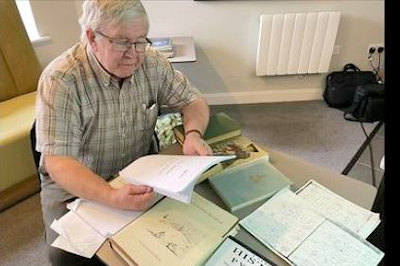 Was Gulliver of 'Gulliver's Travel's' from Givendale? Was Gulliver of 'Gulliver's Travel's' from Givendale?
Phil Gilbank explores the local connection of Givendale to the classic novel Gulliver's Travels. It is an intriguing 17th Century story that Phil has researched for several years. Charles Atkins was from an upper class family that lived in Grimthorpe Manor House, and he went to Pocklington School in 1656.
From there he became an unscrupulous rogue who was thrown out of the Royal Navy for cowardice, dismissed twice as an East India Company surgeon, and sacked from the Indonesian militia. He is then believed to have become an upmarket pirate who later wrote about his experiences. And it is claimed that he was the role model for Gulliver in the classic novel. This talk was first given to the history group in a short talk on the 15th February. It was then presented to the residents of Rogerson Court in Pocklington on 17th April, 2024 and recorded by Andrew Sefton and made into a YouTube video,
Pocklington Town Council recently celebrated 50 years with an exhibition and celebration day on Saturday 27th April 2024 in the 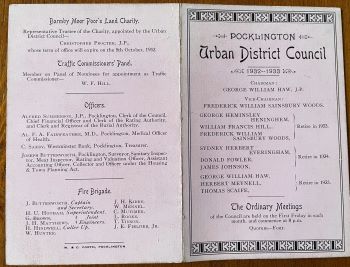 Community Hall at Burnby Hall. Community Hall at Burnby Hall.
A new addition to the website is a copy of the boards on display in the old court house and Andrew Sefton has been examining some of the old records from storage boxes and finding some interesting information about the town. Past officials of the council are visible on small cards which are scanned here for full perusal.
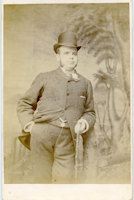 The story of Charles Steels who created the 'Pocklington Steamship Company'. The story of Charles Steels who created the 'Pocklington Steamship Company'.
He was born 2nd Feb. 1852 in Chapmangate the son of Richard and Mary Steels and died 22nd Mar.1896 age 44. He never married and had no children. Charles was involved in the setting up of the 'Pocklington Steamship Company' along with other investers. They had two ships, one was named the 'SS Pocklington' after the town and the second was named the 'SS Charles Steels' named after himself.
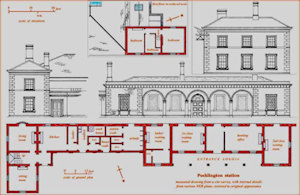 Christmas recollections of Pocklington Station by Ken Durkin Christmas recollections of Pocklington Station by Ken Durkin
I wish my children could have seen Pocklington railway station at Christmas in steam days. I used to go for Mr Drake's box of fish I would go to the ticket office window and look in. The floors were well foot worn from years of wear. There was a big fire blazing in there and you could feel it on your face at the window. Inside were Mr Williamson, Madge Gillery and Trevor Buttle it was always decorated with paper chains and holly and ivy. The gas lighting with its yellow glow added to the Christmas Dickens feeling I would get my ticket and go on to the platform. On the left was the passenger waiting room with its great big fireplace and its fire blazing. I would stand with my back to it. Sometimes I would go up to the footbridge, someone used to decorate it with holly and greenery on the handrails at each end of the bridge. [This article has updated photographs of Pocklington station].
Thursday, 19th Oct. 2023
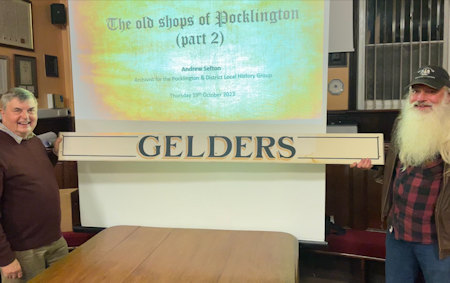 Andrew Sefton delivered a follow up talk on the old shops of Pocklington due to popular request. His last talk in January 2020 was just prior to lock down and the subsquent Covid pandemic. The idea for it was sparked by a Facebook post by Pete Nelson listing all the old shops he could remember. Andrew has collected further pictures and researched information on some of the old families that ran the shops. He had been supplied family pictures of people running the shops from his presence on the Facebook Group 'Pocklington District Heritage' and his contact email on this website. He also conveyed his thanks to people who had supplied pictures to enable his talk and in particular Roger Pattison and David Bowman. Andrew Sefton delivered a follow up talk on the old shops of Pocklington due to popular request. His last talk in January 2020 was just prior to lock down and the subsquent Covid pandemic. The idea for it was sparked by a Facebook post by Pete Nelson listing all the old shops he could remember. Andrew has collected further pictures and researched information on some of the old families that ran the shops. He had been supplied family pictures of people running the shops from his presence on the Facebook Group 'Pocklington District Heritage' and his contact email on this website. He also conveyed his thanks to people who had supplied pictures to enable his talk and in particular Roger Pattison and David Bowman.
Some of the interaction from the audience was very valuable who contributed their memories and included a granddaughter of Fred Lee who afterwards provided some further family information. At the first talk Tarn Morris brought a large shop sign for Fred Lee and coincidentally this event also attracted a large shop sign brought in by Gregg Huber which was for Gelders shop.
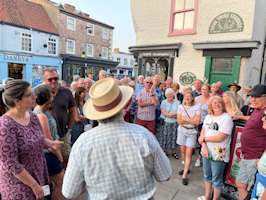 Friday 8th Sept. 2023 Friday 8th Sept. 2023
Phil Gilbank knows his beer, and he knows all of Pocklington hostelries and the history of them. On a fine September evening, he led a swarm of 70 interested Pocklingtonians around the town to hunt out the stories of the lost pubs and breweries. We discovered a ghost story, a drunken jockey and a den of cock fighting at The Black Bull and the Black Swan. Even three lads on bikes started following, wondering what it was all about. Phil took us to Scaife Brewery which was next to No. 6 Pavement. We learnt houses built of bricks smaller than 2.75” in height were built before 1767. He showed us a steep pitch of roof means that house was thatched and told us water from the beck was not really clean enough in those times to make beer. He missed out a couple of other notable bygone pubs as it was getting dusk, so there might be enough to do an 'Old Pocklington Pubs 2'?
Death of Harry Hughes
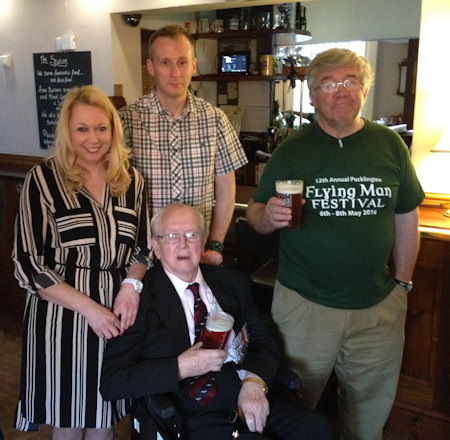 Tributes have been paid following the death of Harry Hughes – the chairman of the 102 (Ceylon) Squadron Association. Tributes have been paid following the death of Harry Hughes – the chairman of the 102 (Ceylon) Squadron Association.
Harry Bartlett, the secretary of the association said: “It is with a great deal of personal sadness, I must inform you of the passing of Flight Lieutenant Harry Hughes, DFC, DFM, Navigator, who also flew with 692 Squadron (Pathfinders) in 1944/45.
"He flew 35 operations with 102 (Ceylon) Squadron and over 50 with 692 Squadron (Pathfinders). “Harry was our Association Chairman for the past seven years and a member of the 102 (Ceylon) Squadron Association since its inception. "He was also a past chairman of the Pathfinder's Association and was a member of the Consultation Committee for the Green Park Bomber Command Memorial. "He was a larger than life character who, along with Tom Sayer another of our past chairmen, strove to keep the memory of the sacrifice by Bomber Command crews in the public view. "He passed away at his home in Cornwall, seventeen days before his 101st birthday. His family were with him.”
In April 1942 Harry trained as an Air Observer (Navigator) at the 8th Air Observer’s School, flying Avro Anson aircraft, which was operated under the British Commonwealth Training Plan, in Ancienne Lorette, Quebec City, Canada, qualifying in July of that year. He returned to England and went to 15 Operational Training Unit at Harwell, continuing to fly in Ansons and then went to the Conversion Unit at RAF Riccall where he moved to the Halifax.
He came to 102 (Ceylon) Squadron in February 1943, flying with Flying Officer Hartley. Having finished his tour of operations in September 1943, as an NCO, he was awarded the Distinguished Flying Medal and moved to the 1653 Conversion Unit as a Navigation Instructor. In July 1944 he went back to operational flying, attending 1655 Mosquito Conversion Unit at Upper Heyford, before being posted to 692 Squadron. Harry flew 50 operations with 692 Squadron. All of them over Germany and including daylight operations.
As a Flying Officer, he was awarded the Distinguished Flying Cross in February 1945. In total Harry accrued almost 1,500 hours of operational flying. He returned to Pocklington many times in his later years for the 102 Squadron Assiciation's reunions and in 2016, aged 92, he enthralled a packed audience in All Saints church with a talk of his poignant and humorous stories from his time in WWII Pocklington. He then popped over the road to enjoy a pint for the first time in over 60 years in his favourite wartime watering hole, the Station Hotel.
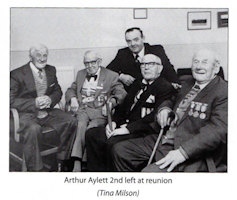 Arthur Aylett of Allerthorpe was on the list of interviewees undertaken by the late Dr. Alf Peacock (of the York Educational Settlement and editor of the magazine 'Gunfire'). In the 1980s, he interviewed around 220 veterans of WW1. After his death they were given to the York Oral History Society who, with the support of Lottery funding, transcribed them, contacted living relatives and published a book in 2014, "These Were Earth's Best: Voices of the First World War", (copies are still available). Arthur's interview was used in the book and is the only recollection of the Waggoners in the text. Arthur Aylett of Allerthorpe was on the list of interviewees undertaken by the late Dr. Alf Peacock (of the York Educational Settlement and editor of the magazine 'Gunfire'). In the 1980s, he interviewed around 220 veterans of WW1. After his death they were given to the York Oral History Society who, with the support of Lottery funding, transcribed them, contacted living relatives and published a book in 2014, "These Were Earth's Best: Voices of the First World War", (copies are still available). Arthur's interview was used in the book and is the only recollection of the Waggoners in the text.
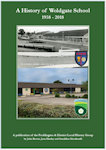
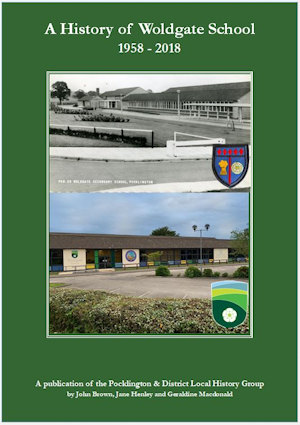 A new book on the history of Woldgate School with pictures and stories of the school buildings, and the people involved in the building and running of the school, and pupils’ experiences from the early days until the 60th anniversary of its opening. A new book on the history of Woldgate School with pictures and stories of the school buildings, and the people involved in the building and running of the school, and pupils’ experiences from the early days until the 60th anniversary of its opening.
This book, covering the history of Woldgate School 1958-2018, is the first to be published about the school itself. It is written by three authors with close connections to the school - a former headmaster John Brown; a past head of the history department Geraldine Macdonald; and Jane Henley a Pocklington and District Local History Group committee member and past Parent-teacher Association representative. Andrew Sefton, Pocklington and District Local History Group Archivist and former pupil, did the typesetting and layout and encouraged the authors throughout.
Many photographs and reminiscences have been provided by the school and ex-pupils and teachers. The project started following the 60th Anniversary of the opening of the school and has taken 5 years of research and many meetings to put it together and release it. We are indebted to the Wates Group and Pocklington District Local History Group for sponsoring the production of the book.
To add your memories to the project click here:
Price £5.00 *
The book is now available from Woldgate School reception, W&C Forth and online via ebay.
If you wish to add your memories to the project click here, they will then appear on this website.
_200px.jpg) At the AGM Phil Gilbank talked about the areas extensive Viking heritage in place names and recently discovered Viking artefacts which point towards an encampment of a contingent of the great Viking army of 867 following discovery of many gaming pieces, and book clasps that look like plundered items. At the AGM Phil Gilbank talked about the areas extensive Viking heritage in place names and recently discovered Viking artefacts which point towards an encampment of a contingent of the great Viking army of 867 following discovery of many gaming pieces, and book clasps that look like plundered items.
On the eve of the coronation Phil Gilbank related 'Pocklington's Royal Connections' - it consisted of a guided tour round All Saints pointing out the many Pocklington people and features linked to kings and queens. The church's direct associations with the crown go back over 900 years; plus there were numerous reminders to locals who became royal officials - in many cases gaining or losng fortunes when they were in or out of favour with the monarch, or in some cases, even losing their head. There were also stories of Pocklington's connections with bizarre coronation ceremonies of yesteryear.
 Pocklington & Wetwang have Iron Age and Gilbank Connections Pocklington & Wetwang have Iron Age and Gilbank Connections
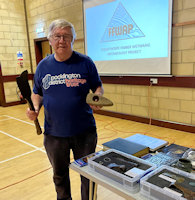
Phil Gilbank gave a talk to Fridaythope Fimber Wetwang Archaeology Project (FFWAP) in Wetwang on 27th March 2023 on Axes, Coins, Pots & DNA/Isotopes. Phil talks about the latest research on the Pocklington and Wetwang Iron Age burials and the newly found links between the two places. He also discusses his own family connections between Pocklington and Wetwang and the discovery of his ancestor being involved with Mortimer's excavations on the Yorkshire Wolds after being transported to Van Diemen’s land to serve a 7 year sentence.
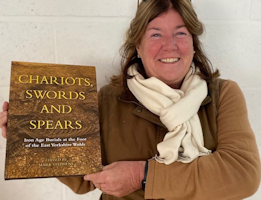 Paula Ware revealed the latest findings about Pocklington archaeology, and launched a major publication about the town's excavations, and displayed the remarkable Pocklington Shield in public for the first time, when she talked in Burnby Hall Community Hall on 23rd February 2023. For a full report of the evening Click Here. Paula Ware revealed the latest findings about Pocklington archaeology, and launched a major publication about the town's excavations, and displayed the remarkable Pocklington Shield in public for the first time, when she talked in Burnby Hall Community Hall on 23rd February 2023. For a full report of the evening Click Here.
Paula's talk - 'Pocklington's chariots, swords and spears - latest updates' mirrored that of the recent publication: 'Chariots, Swords and Spears: Iron Age Burials at the Foot of the East Yorkshire Wolds', a 300-page, hardback volume by Oxbow Books; which details the Burnby Lane and Mile excavations 2014-18 that produced a host of Iron Age and Saxon finds.
Paula, managing director of MAP Archaeological Practice which excavated both sites, outlined the latest disclosures in her talk at Burnby Hall community hall. It included some of the research into the Pocklington artefacts and skeletons since they were first unearthed.
 George Todd started a grocers shop in 1896 on the New Pavement on the premises of the old brewery of George Scaife and was trading there for many years. George started his career in groceries working for 13 years at Charles Steels Grocers in Market Place. The Todd family had links with Pocklington from early times. George Todd started a grocers shop in 1896 on the New Pavement on the premises of the old brewery of George Scaife and was trading there for many years. George started his career in groceries working for 13 years at Charles Steels Grocers in Market Place. The Todd family had links with Pocklington from early times.
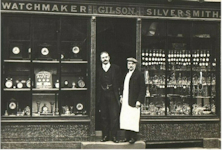 Pocklington clock and watchmakers have been researched by Phil Gilbank. Lots of people have an interest in old clocks (the technical term is (‘horology’), perhaps prompted being given the key to wind up a Victorian wall or mantle clock at their grandparents. While grandfather, or more correctly longcase, clocks generate particular curiosity. The longest serving Pocklington watch and clockmakers were clearly the Gilsons of Market Place – where Thomas started out in business in 1828 and remarkably carried on making watches up to his death, aged 85, in 1894, when his grandson, also Thomas, was assisting him and later became a watchmaker in Lancashire. Pocklington clock and watchmakers have been researched by Phil Gilbank. Lots of people have an interest in old clocks (the technical term is (‘horology’), perhaps prompted being given the key to wind up a Victorian wall or mantle clock at their grandparents. While grandfather, or more correctly longcase, clocks generate particular curiosity. The longest serving Pocklington watch and clockmakers were clearly the Gilsons of Market Place – where Thomas started out in business in 1828 and remarkably carried on making watches up to his death, aged 85, in 1894, when his grandson, also Thomas, was assisting him and later became a watchmaker in Lancashire.
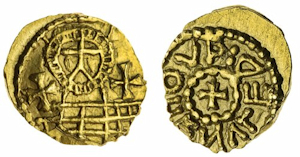 An Anglo-Saxon coin found at Pocklington has recently been linked to Paulinus converting locals to Christianity in 627 AD. An Anglo-Saxon coin found at Pocklington has recently been linked to Paulinus converting locals to Christianity in 627 AD.
The 1,400-year old mid-Saxon gold coin, discovered by a metal detectorist at Pocklington in 2007, was recognised almost a decade later as a ‘Paulinus Gold Shilling’, attributed to the episcopy of the first Bishop of York, 627-633. And the tiny coin was further conjectured to be a commemorative token given by Paulinus after carrying out the first baptisms in Pocklington beck.
Pocklington District Heritage Festival a success!
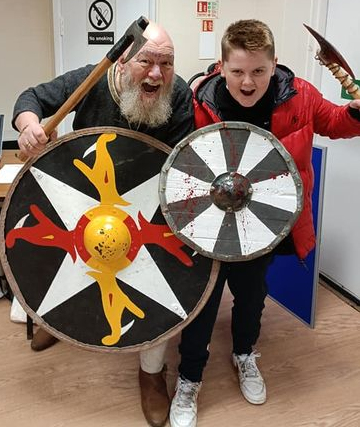 A week of heritage events for Pocklington and District started with an Academic Conference: A week of heritage events for Pocklington and District started with an Academic Conference:
16th November 2022 - "Recent Developments in Archaeology in Eastern Yorkshire" at The Community Hall, Burnby Hall, Pocklington. The conference highlighted recent developments in archaeology and geology in Eastern Yorkshire. Organised by Pocklington District Heritage Trust in partnership with Bridlington U3A Geoarchaeology Group, the conference will hear five presentations illustrating the wealth of archaeology within Eastern Yorkshire; including some investigations within the boundaries of the proposed UNESCO Global Geopark for East Yorkshire.
The conference programme included a talk on the archaeology of the western Wolds by Peter Halkon, an update by the team from Historic England and the York Archaeological Trust on its ‘Food For Thought’ Yorkshire Wolds project, presentations about Geoarchaeology, Hanging Grimston, and archaeologist Paula Ware relating the story of discovering three Iron Age chariots in East Yorkshire.
Day 2 & 3 was a Pop-Up Museum, Exhibition, book sales, School Visits. The photograph (right) was taken by Sean Quinn.
Day 3 included An Iron Age Beanfeast
The evening had food, drink, music and history all with an iron age twist at Pocklington Community Hall.
It had an introductory address by eminent local archaeologist Peter Halkon, plus Celtic story telling and performance by the Haiga group of Shiptonthorpe. A traditonal Celtic supper was enjoyed with live music from Celtic and Folk Band ‘Shiftipig’
 Saturday was a free day of family friendly information and actvites including: Saturday was a free day of family friendly information and actvites including:
· Children’s face paintng by Claire
· Iron age and Roman dressing-up clothes
· Colouring and drawing of iron age activity books
· Jewellery making with glass beads
· Pot making
· Celt vs Roman sword fight
· Mini archaeological dig
· Also, a Horrible History Walk and Talk - gruesome stories of Pocklington's grisly past with Phil Gilbank.
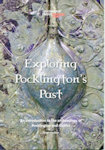
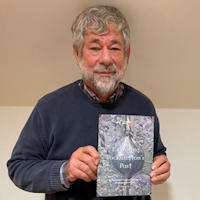
A new book was published for the festival called "Exploring Pocklington's Past" written by Peter Halkon, Details about the book and how to order are available here.
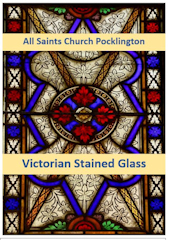 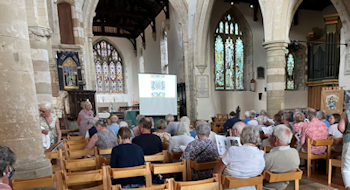 Sue Bond researched the stained glass of All Saints Pocklington Church and gave a talk on Thursday 23rd June 2022. She researched each one and revealled the stories of the local people who commissioned each window, and the renowned Victorian artists and craftsmen who made them. Sue Bond researched the stained glass of All Saints Pocklington Church and gave a talk on Thursday 23rd June 2022. She researched each one and revealled the stories of the local people who commissioned each window, and the renowned Victorian artists and craftsmen who made them.
Her illustrated talk was organised jointly by Pocklington & District local History Group and Pocklington Church Friends.
In conjunction with her talk, Sue has also produced a booklet about the church windows which was launched on the night. The 40-page booklet is packed with colour photographs, information and background material and is available from the Church office.
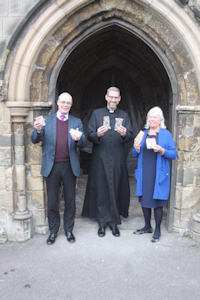 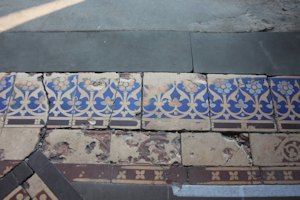 Local historian Phil Gilbank unfolded Pocklington church's links to Victorian icons Augustus Pugin and Herbert Minton at the launch of a major fundraising campaign in the town’s All Saints Church on the 2nd April. The appeal, titled 'Hundreds of Tiles, Thousands of Feet', is to restore the church’s famous porch tiles, designed by Gothic revival architect, Pugin, and made at the Minton tile factory - with both having strong local connections. The porch tiling is an outstanding example of Victorian craftsmanship but has been breaking up at an increasing rate – particularly at the front edge - and the work expected to cost in excess of £40,000. A church spokesman said: “Pocklington's porch is listed by Pesvner as one of the notable pieces of Victorian church design in the East Riding. However, the church's floor is all the more worthy for the stories behind it. Local historian Phil Gilbank unfolded Pocklington church's links to Victorian icons Augustus Pugin and Herbert Minton at the launch of a major fundraising campaign in the town’s All Saints Church on the 2nd April. The appeal, titled 'Hundreds of Tiles, Thousands of Feet', is to restore the church’s famous porch tiles, designed by Gothic revival architect, Pugin, and made at the Minton tile factory - with both having strong local connections. The porch tiling is an outstanding example of Victorian craftsmanship but has been breaking up at an increasing rate – particularly at the front edge - and the work expected to cost in excess of £40,000. A church spokesman said: “Pocklington's porch is listed by Pesvner as one of the notable pieces of Victorian church design in the East Riding. However, the church's floor is all the more worthy for the stories behind it.
"All Saints is a Grade 1 listed building, so a basic repair is not an option and we have to restore it the the highest standards. The final result will bring it back to the colourful state of when it was originally created in 1885."
The appeal launch started on Saturday 2 April, and the evening's programme included a live music recital, and a technical briefing on restoring the encaustic tiling.
Pictured: Churchwardens Nigel Laws and Tina Morley and vicar Rev Jake Belder (centre) show some of the broken tiles in the porch doorway at All Saints.
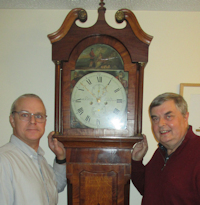 An old Pocklington clock returns to the town after 200 years An old Pocklington clock returns to the town after 200 years. The Pocklington District Heritage Trust is now appealing for someone to temporarily house it where it can be seen by the community. The grandfather clock - more correctly termed a longcase clock - was made in Pocklington 198 years ago, but has spent most of its life in other parts of Britain. The owners, John and Claire Doyle, had kept and cared for it for the past 15 years at their home in Glossop, but after reading an article on the pocklingtonhistory.com website they decided to donate it back to where it originated. The heritage trust is now looking for someone to look after it until its museum plans come to fruition. Phil added: "Having brought it back to Pocklington, it would be a shame if it was out of view of the community. So we are appealing to any public building or local business that might like to house it for the time being in a place where it can be seen."
Anyone who might be interested in looking after it for the heritage trust can make contact by email on pocklingtonheritage@gmail.com, or Phil's mobile is 07944 006133. The clock was made by Reuben Milner in his Pocklington workshop in Regent Street. Identifying it was easy, not only is 'R Milner Pocklington' painted on the clockface, but inside is a label saying: 'Reuben Milner, Regent Street, Pocklington 1823.'
  William Wilberforce & Pocklington 250 - Pocklington and District Local History Group and Pocklington All Saint's Church recently held an open evening of history talk, readings and poetry, exhibition and choral entertainment to celebrate the arrival of William Wilberforce in Pocklington in November 1771. It was held on Thursday 18th November 2021. William Wilberforce & Pocklington 250 - Pocklington and District Local History Group and Pocklington All Saint's Church recently held an open evening of history talk, readings and poetry, exhibition and choral entertainment to celebrate the arrival of William Wilberforce in Pocklington in November 1771. It was held on Thursday 18th November 2021.
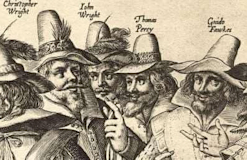
On November 5, 1605, Guy Fawkes and a group of radical English Catholics tried to assassinate King James I by blowing up Parliament's House of Lords. The plot went badly wrong and all of the conspirators were executed. Soon after, Britons began to celebrate Fawkes' demise and the survival of their king by burning effigies, lighting bonfires and setting off fireworks—a tradition which has continued to this day. There is a link to the plotters from the Pocklington area as the Wright brothers John and Christopher's mother was Ursula Rudston from Hayton who married Robert Wright the conspirators father. The brothers sister Martha also married another conspirator Thomas Percy.
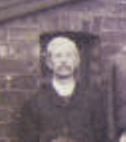 The diary of Atkinson Skinner the Pocklington Church of England School headmaster has been transcribed by Chris Watson for the years 1882-1888. Chris has given his kind permission to reproduce it on this website. Atkinson Skinner was the Master at Pocklington (Mixed) National School from 1888-1923. Prior to this, he was Master of Barnetby le Wold in Lincolnshire (1882-1885) and Huggate National School (1886-1887). Atkinson's brother had a confectionary shop in the Market Place. Edwin Skinner had his own shop from 1913 - 1927 and was located where Danby's newsagents is today. The diary of Atkinson Skinner the Pocklington Church of England School headmaster has been transcribed by Chris Watson for the years 1882-1888. Chris has given his kind permission to reproduce it on this website. Atkinson Skinner was the Master at Pocklington (Mixed) National School from 1888-1923. Prior to this, he was Master of Barnetby le Wold in Lincolnshire (1882-1885) and Huggate National School (1886-1887). Atkinson's brother had a confectionary shop in the Market Place. Edwin Skinner had his own shop from 1913 - 1927 and was located where Danby's newsagents is today.
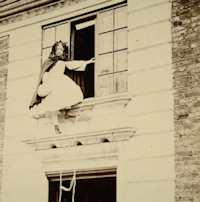 Lewis Carroll first met the young girl Alice Donkin whilst visiting the Donkin family in the Manor House at Barmby Moor in 1862. It is said that she was the inspiration for the character Alice in his world-famous novels “Alice in Wonderland” and “Alice through the looking glass”. Carroll’s diary clearly documents his visit to Barmby Moor along with his association with Pocklington School Headmaster Dr. Frederick Gruggen. Carroll was experimenting with photography and took a photograph of Alice hanging outside the bedroom window in 1862 with a rope ladder and titled the photograph ‘The elopement’. Lewis Carroll first met the young girl Alice Donkin whilst visiting the Donkin family in the Manor House at Barmby Moor in 1862. It is said that she was the inspiration for the character Alice in his world-famous novels “Alice in Wonderland” and “Alice through the looking glass”. Carroll’s diary clearly documents his visit to Barmby Moor along with his association with Pocklington School Headmaster Dr. Frederick Gruggen. Carroll was experimenting with photography and took a photograph of Alice hanging outside the bedroom window in 1862 with a rope ladder and titled the photograph ‘The elopement’.
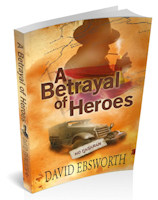 A new novel has now been released by David Ebsworth titled ‘A betrayal of heroes’. The author was inspired by Phil Gilbank’s talk on YouTube entitled ‘La Neuve in Pocklington and the Liberation of Paris’ and it helped him to write this novel about the Spanish Republicans who stayed in Pocklington just prior to the D-Day invasion of France and who were instrumental in the liberation of Paris. The author has given full attribution in the book to the Pocklington and District History Group, and it is obvious he has used much inspiration for his novel from the video. He mentions many Pocklington locations such as Phil describing the flamenco guitarist playing in the Feathers, and has used his research on the Pocklington History website to mention Pocklington characters such as Mr Barker the dairyman. His research for this book has been immaculate. It is a weighty tome and judging from the positive reviews about the author's books, it is well worth a read and has lots of references to the Pocklington area. A new novel has now been released by David Ebsworth titled ‘A betrayal of heroes’. The author was inspired by Phil Gilbank’s talk on YouTube entitled ‘La Neuve in Pocklington and the Liberation of Paris’ and it helped him to write this novel about the Spanish Republicans who stayed in Pocklington just prior to the D-Day invasion of France and who were instrumental in the liberation of Paris. The author has given full attribution in the book to the Pocklington and District History Group, and it is obvious he has used much inspiration for his novel from the video. He mentions many Pocklington locations such as Phil describing the flamenco guitarist playing in the Feathers, and has used his research on the Pocklington History website to mention Pocklington characters such as Mr Barker the dairyman. His research for this book has been immaculate. It is a weighty tome and judging from the positive reviews about the author's books, it is well worth a read and has lots of references to the Pocklington area.
OLDER Updates....CLICK HERE
|